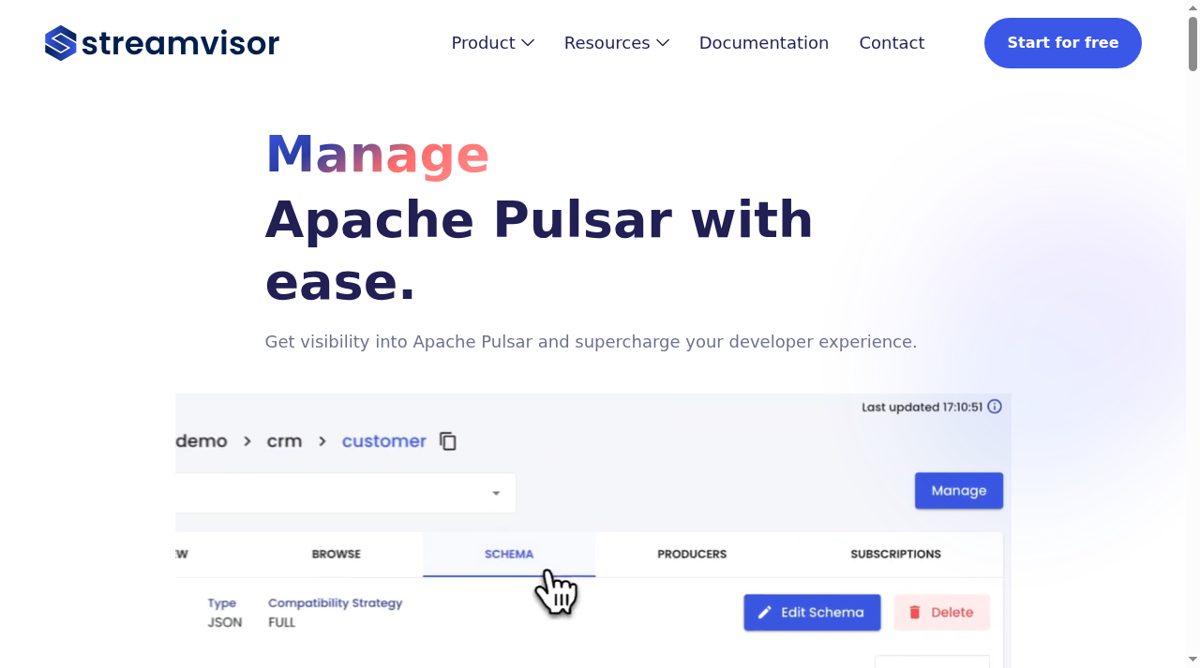
Streamvisor is a management platform for Apache Pulsar aimed at teams who find themselves babysitting their streaming infrastructure. It organizes work around three verbs: manage, monitor and secure. The observability layer gives visibility into an event driven architecture without requiring deep Pulsar knowledge, including viewing and filtering messages, so developers can answer questions about their clusters without a Pulsar specialist on call.
The 1.1 release in July 2025 pushed the platform further into enterprise requirements. It added role based access control with fine grained, resource level permission management: groups can be assigned permissions with wildcard expressions that match multiple resources or only certain topics by prefix, down to restricting who may consume a topic, create schemas or manage a subscription. The release also brought OpenShift compatibility, and RBAC is part of the Enterprise edition.
Streamvisor offers a free starting tier so teams can evaluate it against a real cluster, and backs the product with Pulsar Academy training material and documentation. It is a commercial platform rather than an open source tool, so budget accordingly if RBAC and enterprise support matter. For organizations standardizing on Pulsar, it replaces a pile of scripts and ad hoc dashboards with one control point.