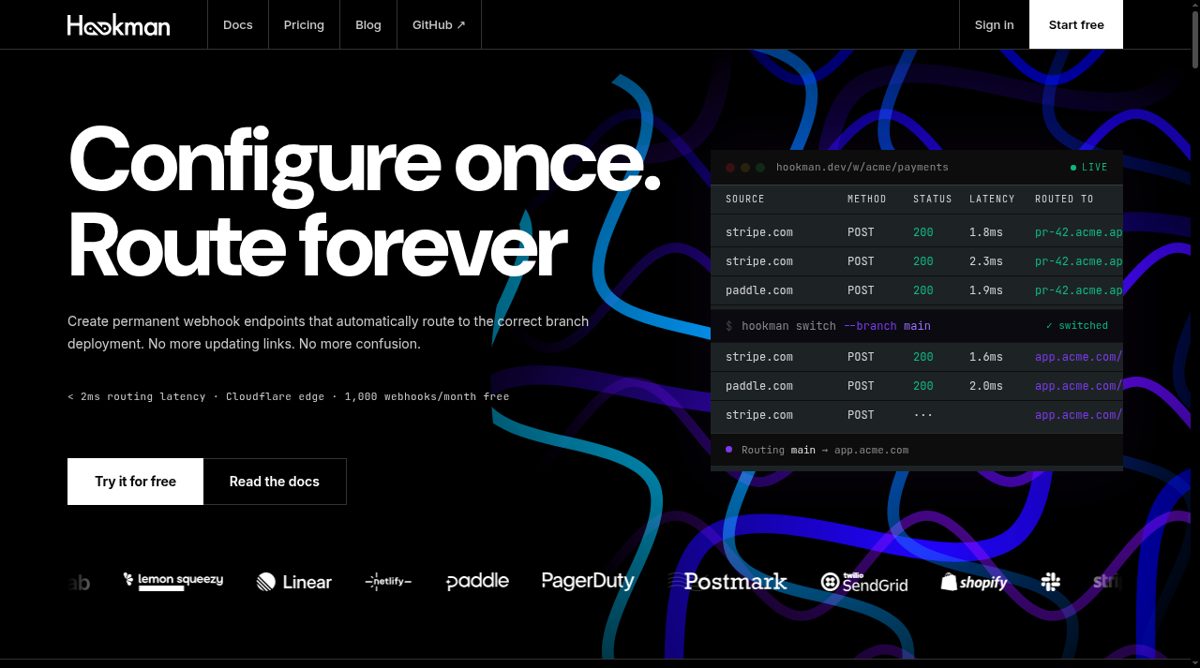
Hookman sits between a webhook provider and an application's deployments. Developers give a provider a permanent Hookman endpoint, then change the destination inside Hookman as branches and preview environments change. A default active deployment handles unmatched traffic, while routing rules can select a destination from headers, query parameters or JSON fields.
The product also describes fan-out to additional deployments, delivery logs and replay of stored requests. A CLI and GitHub Action can register branch deployments as part of a development workflow. Hookman offers a free tier with limits on projects, deployments, monthly webhooks and log retention; paid tiers increase those allowances and add features such as retry on failure. Because webhook payloads are stored for replay and inspection, retention settings and the data carried by those events matter. It is aimed at teams that want consistent provider configuration while testing or operating several versions of their own application.