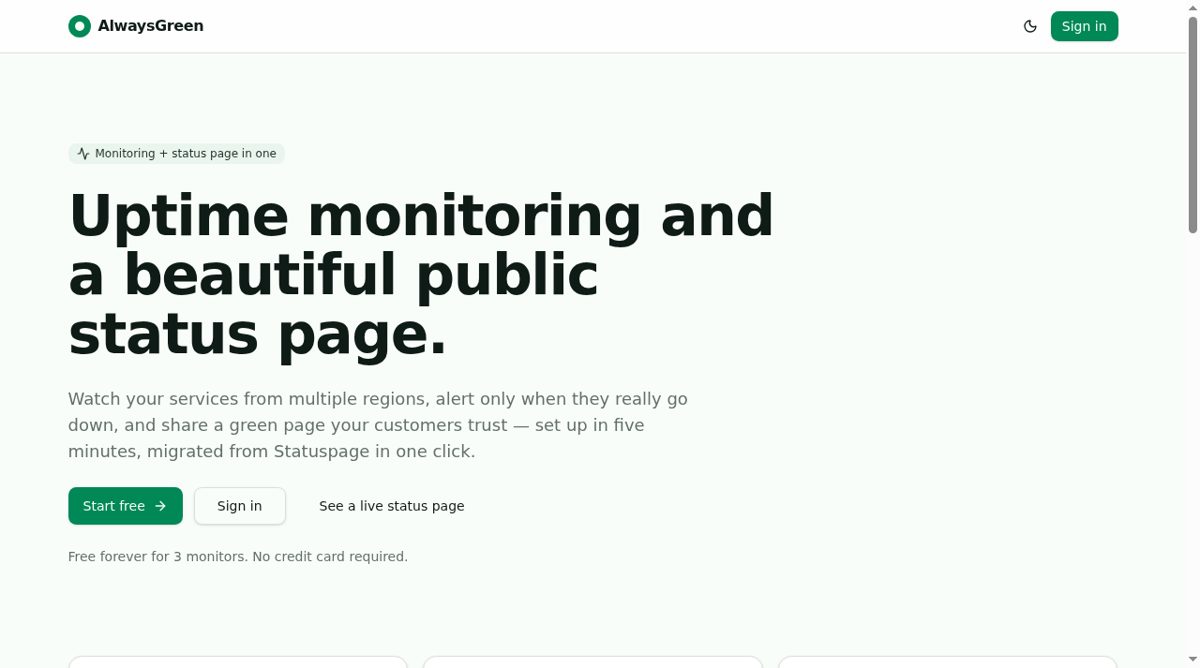
AlwaysGreen combines uptime monitoring with a public status page. A team can check services from multiple regions, publish incident updates and give customers one place to see service health. The product describes quorum-based failure checks, alert thresholds, duplicate-alert control and flap suppression as ways to reduce noisy notifications. It also offers an import route for components and historical incidents from Atlassian Statuspage, intended for teams moving an existing status-page setup.
The published plans make clear that monitoring cadence and regions vary by tier. Free includes three monitors checked every five minutes from two regions, one public status page, fifty email subscribers and thirty days of history. Indie is listed at $9 per month with ten monitors, one-minute checks, three regions, a custom domain, unlimited subscribers and Slack plus email alerts. Team is listed at $19 per month with fifty monitors, thirty-second checks, four regions, five pages, branding removal and one year of history. Paid-plan subscriber limits should not be applied to the free tier.
The service brings checks, public communication and incident history together rather than leaving a team to maintain those as disconnected tools. Custom-domain support and automated TLS are advertised, but the plan comparison puts custom domains on paid plans. The free plan is described as requiring no credit card. A small project can therefore evaluate a limited monitoring setup before deciding whether faster checks, more regions or several public pages justify a paid plan. Monitoring and alerts help expose outages; they do not themselves prevent service failures or guarantee that every failure will be detected immediately.