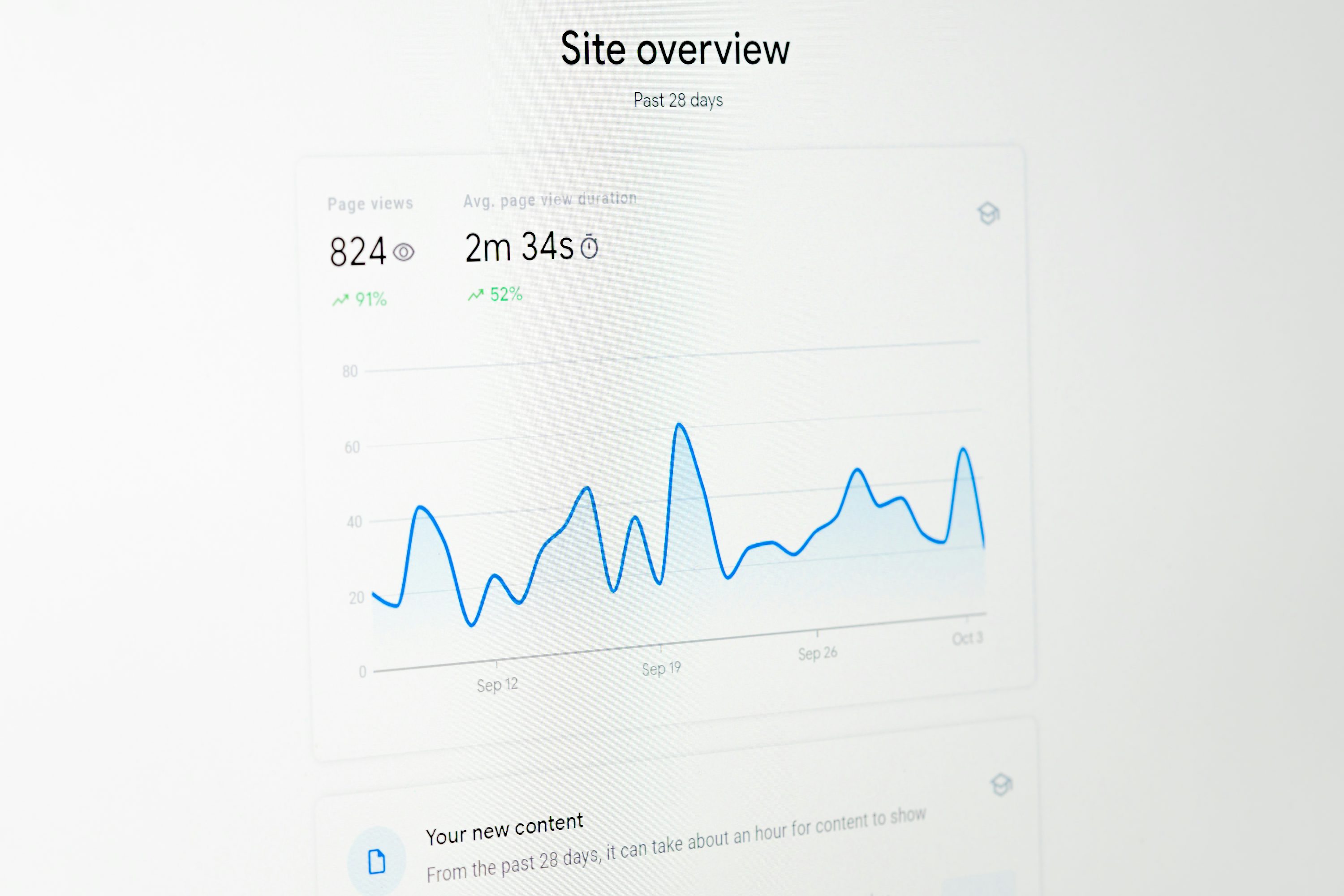
A broader answer than a pageview counter
Rybbit positions itself as a modern alternative to Google Analytics, emphasizing a lightweight, cookieless approach. Its homepage also lists features that extend beyond counting visits: custom events, funnels, user journeys, web vitals and session replay. The product is therefore aimed at understanding behavior as well as reporting traffic totals.
That distinction is important for a small company. A traffic chart can show that people arrived, but it may not explain whether they understood the offer, started a signup or failed to complete an important step. Rybbit's feature set is organized around connecting those observations. The founder still has to decide what a meaningful conversion is; the analytics system cannot infer the business model merely from a script on a page.
Events turn activity into a question
The site describes tracking signups, purchases and other interactions through custom events. A useful event plan starts with a decision the team wants to make. If the question is whether visitors find the contact form, the team needs to distinguish seeing the page, opening the form and completing a valid submission. One generic click event is unlikely to answer all three.
Keep event names and properties understandable. Avoid collecting every available value simply because the system can receive it. A small set of stable events is easier to compare over time than a changing collection of accidental implementation details. After deployment, perform a known test journey and inspect the record to confirm that successful and failed actions are represented accurately.
Funnels and journeys answer different things
Rybbit lists both conversion funnels and user journeys. A funnel is useful when the team has a particular sequence in mind, such as landing, signup and purchase. A journey view can help examine the paths people actually take, including detours that the original design did not anticipate. The two views are complementary rather than interchangeable.
For example, a founder may expect visitors to read pricing before starting a trial. A journey might show many people moving from a guide directly into signup instead. That is a reason to investigate the experience, not proof that one route is better. Combine quantitative patterns with an understanding of what the pages promise. A path with fewer steps can still be confusing, and a longer path can serve a visitor who needs more information.
Replay and performance need care
The site describes session replay as a way to spot usability issues and web vitals as a way to monitor user experience. These tools can connect a low conversion rate with something concrete, such as an interaction that does not work or a slow page. Their value depends on collecting the right information without exposing material the team does not need.
Rybbit makes privacy and compliance claims on its website and says its hosted infrastructure is in Germany. Those are product statements, not a complete legal assessment of every possible deployment. The application owner still needs to examine what data is sent, which fields are masked, who can view recordings and which notices or permissions apply. Cookieless does not mean that every way of recording a user journey is automatically appropriate.
Open source and the operational choice
Rybbit describes itself as open source and offers both its cloud service and self-hosting. It also lists an API and raw-data export. Those options matter to teams that want access to their underlying records or prefer to operate infrastructure themselves. Self-hosting changes who handles updates, backups, access control and availability; it is not simply a hosted subscription with the bill removed.
For a trial, begin with one site and a few questions the business actually needs answered. Verify the event flow, inspect bot filtering and compare recorded actions with known test visits. Decide whether the dashboard changes a product decision before expanding collection. An analytics tool earns its place when it helps the team improve an experience, not when it fills every available chart. Explore the product's directory profile or browse more analytics tools.
A dashboard should lead to an action
Before adding another report, write down the decision it is meant to inform. If visitors abandon a signup step, the next action may be to inspect the form, clarify a requirement or test a technical failure. The chart is a clue, not the completed diagnosis. A founder should resist treating a rising pageview count as proof that the product is becoming more useful.
Keep a record of changes alongside the metrics. A new traffic source, a revised page and a tracking change can each alter a report for different reasons. Without that context, a team may attribute an improvement to the wrong intervention. Start with a few dependable events and a repeatable way to verify them. Rybbit's broad feature set is most useful when it supports a small number of clear product questions instead of encouraging collection for its own sake.
Analytics becomes useful when the numbers change a decision. A small team can start with a weekly question about activation, then compare the same event definitions over time. That keeps the dashboard connected to product work rather than making traffic growth the only goal.